Location:





Water Heater Repair & Installation in Eastern PA
★ Trusted by 4,956+ Customers


Reliable hot water is essential for bathing, cooking, cleaning, laundry, and everyday comfort. When a water heater stops producing enough hot water, begins leaking, or reaches the end of its service life, Harris Plumbing, Heating, Air & Electrical provides the repair, maintenance, installation, and replacement services needed to restore dependable performance.
We service traditional tank and tankless water heaters throughout Chester, Delaware, Montgomery, and Bucks Counties. Our plumbers evaluate the equipment, explain what is causing the problem, and help homeowners choose a practical solution based on the condition of the system, household hot water demand, energy source, and long-term cost.
Whether the problem requires a focused repair or a complete water heater replacement, Harris is ready to help.
Complete Water Heater Services
Water heater problems can develop gradually or appear without warning. Some are caused by a failed component, sediment buildup, or an incorrect setting. Others indicate that the tank or heat exchanger has deteriorated beyond a reliable repair.
Our plumbers service the entire water heating system, including the equipment, water connections, valves, venting, fuel or electrical supply, and related safety components.
Water Heater Repair
A water heater does not always need to be replaced when performance declines. Many problems can be corrected by replacing a failed component, adjusting the system, clearing buildup, or repairing a connection.
Common water heater repair needs include:
-
No hot water
-
Hot water that runs out too quickly
-
Water that does not reach the desired temperature
-
Inconsistent water temperatures
-
Discolored or rusty-looking hot water
-
Popping, rumbling, or banging sounds
-
Water collecting around the unit
-
A pilot light that will not stay lit
-
Repeated ignition failures
-
A tripped breaker
-
Leaking valves or plumbing connections
-
An error code on a tankless system
A professional diagnosis is important because several problems can produce similar symptoms. For example, a lack of hot water in an electric system may result from a failed heating element, thermostat, wiring issue, or loss of power. A gas water heater may stop heating because of an ignition problem, faulty control, venting issue, or interrupted gas supply.
We test the relevant components before recommending a repair.
When a Water Heater Should Be Replaced
Water heater replacement is often the better investment when the tank is leaking, the equipment has extensive corrosion, or repairs are becoming frequent. The decision should consider more than the age of the unit alone.
Replacement may be appropriate when:
-
Water is leaking from the body or seam of the tank.
-
The tank has visible corrosion or significant rust.
-
Hot water recovery has declined despite repairs.
-
The unit requires repeated service.
-
Replacement parts are no longer available.
-
The equipment is improperly sized for the household.
-
The cost of repair is high compared with the remaining service life.
-
Energy use has increased because the system is operating inefficiently.
-
The existing installation has safety or code concerns that cannot be reasonably corrected.
A leaking connection or valve may be repairable. A tank that has rusted through generally cannot be permanently repaired and should be replaced before the leak worsens.
Water Heater Installation
Proper water heater installation affects safety, performance, efficiency, and equipment life. Installing a unit involves more than connecting water lines and turning it on.
Our installation process accounts for:
-
Household hot water demand
-
Number of bathrooms and occupants
-
Tank capacity or tankless flow rate
-
Gas, electric, or other available energy sources
-
Venting requirements
-
Electrical capacity
-
Water pressure
-
Available installation space
-
Drainage and overflow protection
-
Local plumbing and mechanical requirements
The new water heater must be sized to deliver enough hot water during normal peak use without being unnecessarily oversized. A system that is too small may run out of hot water frequently, while an oversized unit may cost more to purchase and operate than necessary.
We remove the old equipment, prepare the installation area, connect the new system, and test it for proper operation before completing the service.
Traditional Tank Water Heaters
Tank water heaters store a set volume of heated water for use throughout the home. They remain a practical choice for many Eastern Pennsylvania households because they are familiar, dependable, and available in a range of capacities.
A conventional water heater may be suitable when:
-
The home already has the necessary gas or electrical connections.
-
The household has predictable hot water use.
-
Space is available for a storage tank.
-
The homeowner prefers a lower initial installation cost.
-
The existing system can be replaced without major utility modifications.
Tank water heaters can be powered by gas or electricity. The best option depends on the home’s existing infrastructure, energy costs, available space, and expected demand.
Tankless Water Heater Services
Tankless water heaters warm water as it moves through the system rather than storing it in a tank. They can provide extended hot water when properly sized and maintained, but they are not automatically the right fit for every home.
A tankless system may offer:
-
A smaller equipment footprint
-
Reduced standby heat loss
-
Longer hot water availability
-
Individually replaceable internal components
-
A longer potential service life with appropriate maintenance
The system must still be sized for simultaneous demand. Running several showers, faucets, or appliances at once can exceed the unit’s flow capacity if the equipment was not selected correctly.
Tankless installation may also require changes to gas piping, venting, electrical service, condensate drainage, or water treatment. Our plumbers evaluate the home before recommending a system so homeowners understand both the benefits and the installation requirements.
We also repair tankless systems that are experiencing ignition problems, temperature fluctuations, low flow, mineral buildup, venting faults, or manufacturer error codes.
Water Heater Maintenance
Routine maintenance helps preserve efficiency, identify developing problems, and reduce the likelihood of unexpected failure. Maintenance needs vary by equipment type, water quality, system design, and manufacturer.
Water heater maintenance may include:
-
Inspecting the tank and plumbing connections for leaks
-
Checking the temperature setting
-
Testing the temperature and pressure relief valve
-
Examining the venting system
-
Inspecting the burner or electrical components
-
Checking the expansion tank
-
Looking for corrosion around fittings and valves
-
Flushing sediment or mineral buildup when appropriate
-
Cleaning filters or strainers
-
Descaling tankless water heater components
-
Reviewing system error codes and operating history
Sediment accumulation is a common concern in tank-style water heaters. Minerals can settle at the bottom of the tank, reduce heat transfer, contribute to noise, and place additional stress on the equipment.
Tankless water heaters are also affected by mineral scale. Scale can restrict internal passages and reduce heat-transfer performance, particularly when maintenance is delayed.
Water Quality and Water Heater Performance
Water conditions vary throughout Eastern Pennsylvania. Homes may receive municipally treated water or rely on private wells, and the mineral content can differ from one community to another.
Hard water can contribute to:
-
Scale buildup on heating elements
-
Sediment accumulation inside tanks
-
Restricted flow through tankless heat exchangers
-
Reduced heat-transfer efficiency
-
Premature component wear
-
More frequent maintenance needs
Private well systems can introduce additional considerations related to sediment, iron, pressure fluctuations, and water treatment equipment. Homeowners experiencing repeated water heater buildup may benefit from evaluating both the appliance and the water conditions supplying it.
When a water heater problem may be connected to a broader plumbing issue, we can evaluate the home’s plumbing system rather than treating the equipment in isolation.
Leaking Water Heaters
Water around a water heater should be investigated promptly. Even a small amount of moisture can spread into flooring, drywall, insulation, finished basements, and nearby mechanical equipment.
The source may be:
-
A loose plumbing connection
-
A leaking shutoff valve
-
A damaged drain valve
-
A failing temperature and pressure relief valve
-
Condensation
-
A leaking expansion tank
-
A corroded tank
-
A nearby pipe rather than the water heater itself
Do not assume the tank has failed until the source has been confirmed. Water can travel along pipes or equipment surfaces before reaching the floor.
When water is actively spreading, shut off the water supply if it can be done safely and request emergency plumbing service.
Gas Water Heater Service
Gas water heaters rely on a burner, ignition system, gas control, venting system, and combustion-air supply. Problems with these components can affect both performance and safety.
Call for service when:
-
The pilot light repeatedly goes out.
-
The burner will not ignite.
-
The flame appears unusual.
-
Soot is visible near the unit or vent.
-
The water heater shuts down unexpectedly.
-
The system produces an error code.
-
Exhaust or combustion odors are present.
Do not attempt to relight or operate a gas water heater when there is a suspected gas leak, visible soot, damaged venting, or water around the controls. Leave the area and contact the appropriate emergency service when there is an immediate safety concern.
Electric Water Heater Service
Electric water heaters use one or more heating elements controlled by thermostats. A failure in one part of the system can result in no hot water, reduced capacity, slow recovery, or unusually high energy use.
Common electric water heater problems include:
-
A failed upper or lower heating element
-
A malfunctioning thermostat
-
Loose or damaged electrical connections
-
A repeatedly tripped breaker
-
Sediment covering the lower element
-
An improperly set temperature control
Because electric water heaters use high-voltage components, electrical testing and repair should be performed by qualified professionals.
Water Heater Expansion Tanks
An expansion tank helps manage pressure created as water heats and expands within a closed plumbing system. When the tank is missing, improperly sized, waterlogged, or no longer functioning, pressure can increase within the plumbing system.
Possible signs of an expansion-related problem include:
-
Water discharging from the relief valve
-
Pressure fluctuations
-
Premature valve or fixture wear
-
Banging or movement in nearby pipes
-
Repeated water heater component failure
We inspect the expansion tank and household water pressure as part of the broader system evaluation when symptoms suggest excessive pressure.
Our Water Heater Service Process
Our process is designed to identify the actual problem and give homeowners a clear basis for deciding between repair and replacement.
1. Evaluate the Symptoms
We ask about the loss of hot water, temperature changes, noises, leaks, error codes, recent repairs, and the age of the equipment.
2. Inspect the Complete System
Our plumber examines the water heater, connected piping, shutoff valves, venting, drain components, electrical or gas supply, and visible safety devices.
3. Test the Equipment
Testing may include checking temperature settings, electrical components, ignition controls, burner performance, water pressure, flow rate, or tankless diagnostic codes.
4. Explain the Options
We explain what failed, whether the condition is repairable, and how the age and condition of the equipment affect the recommendation. When both repair and replacement are reasonable, we outline the practical differences.
5. Complete the Authorized Work
After the homeowner approves the service, we repair the existing equipment or complete the replacement. The system is then tested for temperature, flow, leaks, ignition, and proper operation.
Water Heater Service Across Eastern Pennsylvania
Homes throughout Chester, Delaware, Montgomery, and Bucks Counties include a broad mix of housing ages and plumbing systems. That variety affects how water heaters are installed, vented, sized, and serviced.
Older homes in established communities may have compact utility spaces, masonry chimneys, aging shutoff valves, older electrical panels, or plumbing that has been modified over several decades. Replacing a water heater in these properties may require correcting existing connection or venting issues rather than simply installing the same type of equipment.
Newer subdivisions may have higher household demand, larger soaking tubs, multiple bathrooms, and simultaneous appliance use. These homes often require closer attention to tank capacity, burner input, or tankless flow rate.
Finished basements are common throughout the region, making leak protection especially important. A failed tank can damage flooring, walls, stored belongings, and nearby heating or electrical equipment.
Some homes in the less densely developed portions of Chester, Montgomery, and Bucks Counties rely on private wells. Well pressure, mineral content, sediment, and water treatment systems can all influence water heater performance.
Our recommendations account for the home, the existing utilities, local water conditions, and the way the household actually uses hot water.
Why Homeowners Choose Harris for Water Heater Service
Water heater service should provide more than a temporary return of hot water. It should help the homeowner understand the condition of the equipment and avoid unnecessary repairs or premature replacement.
Harris Plumbing, Heating, Air & Electrical provides:
-
Repair and replacement for tank and tankless systems
-
Service for gas and electric water heaters
-
Diagnosis based on testing rather than symptoms alone
-
Clear explanations of repair and replacement options
-
Proper equipment sizing
-
Attention to venting, pressure, drainage, and safety components
-
Local service throughout Chester, Delaware, Montgomery, and Bucks Counties
-
Support for related plumbing concerns
Our plumbers are prepared to address both the immediate water heater problem and the surrounding plumbing conditions that may have contributed to it.


Book online or call to schedule a service today!
Need service? Our team is just a phone call away.Schedule Water Heater Service in Eastern Pennsylvania
Do not ignore a leaking tank, recurring loss of hot water, unusual system noise, or repeated equipment shutdowns. Early service may prevent water damage, reduce disruption, and clarify whether the system can be repaired or should be replaced.
Contact Harris Plumbing, Heating, Air & Electrical for water heater repair, maintenance, installation, or replacement in Chester, Delaware, Montgomery, and Bucks Counties.

$450 OFF
Tankless Water Heater
Present offer at time of service. Not available to combine with other offers.
Expires: Oct 31, 2026
Expires: Oct 31, 2026
Contact Us
Frequently Asked Questions
Our Reviews
Hear From Our Happy Customers
Great service from Harris Plumbing and Electrical on repair of my electrical panel, Jared Rodriquez and crew were very friendly knowledgeable and professional. They did an excellent job.
I also had Chris B install fire detectors. He was prompt and professional. Harris has been my go to company for my electrical work.
I also had Chris B install fire detectors. He was prompt and professional. Harris has been my go to company for my electrical work.

Dedra Stover
23 hours ago

They are the fastest service company I've ever used. My technician, Andrew, was amazing! Took his time and explained everything! Id recommend for any electrical, heating, air and plumbing. They do it all!

Mary Ann Moebius
1 day ago
Had Harris out to do an assessment on my heater and the technician Chris found a dangerous situation with my heater exchanger that could have slowly put carbon monoxide into my house. I’m grateful that Lee was able to come to the house right away and provide me selections and options. I was able to get a new HVAC system the next day and my family can safely sleep in our home. Everyone from Mathew and Chris M to Lee and the install guys, Louis, Mike and Jhar were amazing and genuinely great people I would have in my home any time.

Valerie Clay
1 day ago
He told me things I never knew about plumbing. He gave good estimates.

James Gill
2 days ago
Tyleek was extremely knowledgeable, professional, and kind. He was prompt and provided useful recommendations to ensure our units continue operating optimally. Anyone who has Tyleek come out to service their units is in good hands

Matt Steen
2 days ago
Tyleek was amazing today in helping with my furnace tune up. He provided valuable information and choices on what needs to be done and best next steps. 10/10 service.

Jasmine Mosley
2 days ago
Our technician, Michael was excellent, he was very professional, friendly, and fast. He was able to fix our AC system, and install our new thermostat, he went above and beyond.

Eathan Kempf
2 days ago
I was quite satisfied with meeting with Josh, yesterday. While I didn't care for the price, I had to expect things would be that high of a cost. Still, Josh's professional conduct while he was inspecting my tank made it that much easier to say, "yes," and go ahead with the installation request. I am not concerned, at this point, about the job itself. The heater installation, earlier this year was very nicely done and the unit is working great.

Lee Bacon
2 days ago
The technician first of all was polite, he put his booties on. And I appreciate that because I have hardwood floors original. The technician looked at the situation was able to fix the issue and showed me what can be another possible problem if not addressed.

Kevin Highsmith
2 days ago
Requested same day service in the AM and Scott was at the house by 3:00. He was very knowledgeable and professional, making sure that he understood what I wanted regarding the outdoor outlet and the line to it. He worked quickly and left the patio cleaner than when he arrived. I would highly recommend Harris for electrical work.

Rick Greenwood
3 days ago
Our Service Area
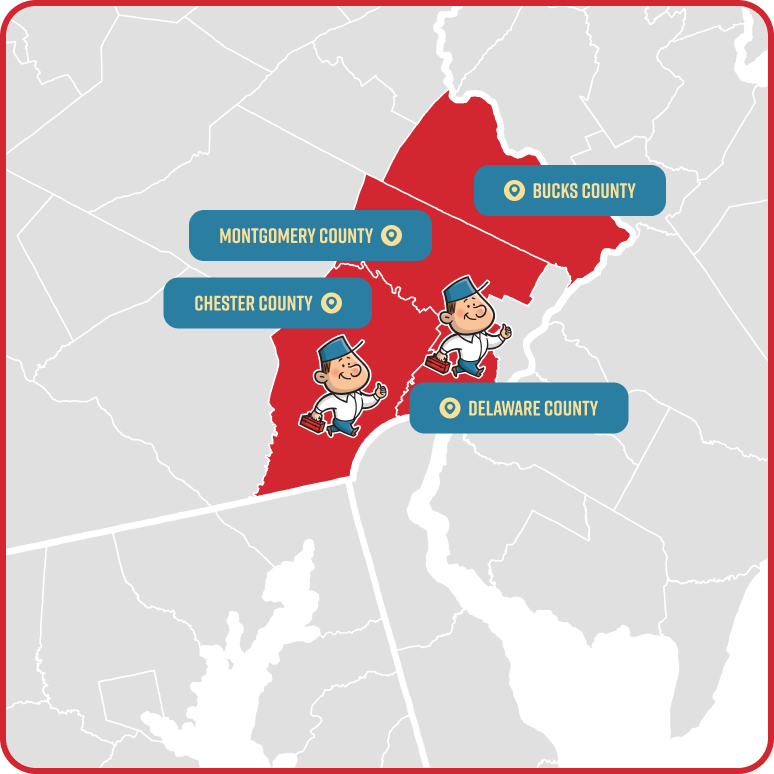
Serving Eastern Pennsylvania & Local Communities Near Media and West Chester
Harris Plumbing, Heating, Air, & Electric has been serving homeowners throughout Southeastern Pennsylvania for over 40 years. Our service area includes communities across Chester, Delaware, Montgomery, and Bucks counties. Even if you don't see your city listed, give us a call to find out if we can make it out to your home. Chester County
- Delaware County
- Montgomery County
- Bucks County