Location:





Electrical Panel Repairs & Upgrades in New Jersey
★ Trusted by 13,193+ Customers

Repeated breaker trips, unreliable power, and signs of overheating need a clear diagnosis before you decide what to replace. At Harris Plumbing, Heating, Air, & Electric, we provide electrical panel repair, replacement, upgrades, and subpanel service throughout our New Jersey service area.
Our licensed electricians evaluate the panel, connected circuits, and electrical demand before recommending work. Whether you need to fix an electrical panel problem, replace deteriorated equipment, or prepare for electric heating and vehicle charging, we explain what your home needs and why.
Complete Electrical Panel & Subpanel Services
New Jersey has a substantial stock of postwar ranches, Cape Cods, and split-levels whose electrical systems may predate central air conditioning, electric heating, and EV charging. Later renovations can add demand without updating the original panel or service, leaving limited circuit space, aging equipment, or insufficient capacity.
As part of our residential electrical services, we evaluate those concerns separately. The right solution may be a circuit repair, compatible breaker replacement, a new panel, a subpanel, or a service upgrade based on your home’s calculated electrical demand.
-
Electrical panel troubleshooting and repair
-
Breaker panel repair and compatible breaker replacement
-
Main electrical panel replacement
-
Electrical panel and service capacity upgrades
-
Subpanel installation, replacement, and repair
-
Feeder, connection, grounding, and bonding corrections
-
Panel work for heating upgrades, EV charging, and renovations
-
Generator-related distribution and transfer equipment coordination
We distinguish between the condition of the equipment, available circuit spaces, and the amount of power the service can supply. Those are separate concerns, and correcting one does not automatically resolve the others.
Electrical Panel Repair & Troubleshooting
A breaker that trips is not necessarily a failed breaker, and flickering lights do not automatically mean the panel needs replacement. Overloaded circuits, damaged wiring, equipment faults, loose connections, and utility-side problems can produce symptoms that overlap.
Our electrical panel repair process starts by identifying where the fault originates. If the problem extends beyond the panel, we can address the necessary electrical repairs rather than replacing components that are functioning correctly.
Signs Your Breaker Panel Needs Attention
Changes that appear during heavy heating or cooling use can reveal a circuit or connection problem that was less noticeable under lighter demand. Problems that begin after a storm also need evaluation of the service equipment and any possible water exposure.
Schedule an assessment when you notice the following:
-
Repeated breaker trips: A circuit loses power again after being reset or trips when particular equipment operates.
-
Buzzing or crackling: New sounds come from the panel or breaker area.
-
Burning odors or discoloration: There are signs of overheating around the enclosure or electrical components.
-
Unexpected power loss: One circuit, several circuits, or part of the home loses power.
-
Flickering or dimming lights: Persistent changes occur when equipment starts or while several appliances operate.
-
Moisture or corrosion: Rust, staining, or evidence of water intrusion appears around the panel.
We investigate these symptoms before deciding whether breaker panel repair is appropriate. If there is smoke, active sparking, or fire, move away and contact emergency services; do not open the enclosure or approach equipment through standing water.
Circuit Breaker Repair & Replacement
Our circuit breaker repair service starts with determining why the circuit loses power. Repeated trips may indicate an overload, damaged wiring, an appliance fault, or a connection problem rather than a defective breaker.
When a breaker itself fails, we replace it with a component approved for the panel and application rather than attempting an internal repair. We also evaluate its connection to the panel, because replacing a breaker will not correct a damaged bus or surrounding heat damage.
A serviceable panel may need connection repairs, grounding and bonding corrections, or changes to an improper circuit arrangement. We never install a higher-amperage breaker simply to stop tripping; its rating must remain appropriate for the wiring and application.
Electrical Panel Replacement
Electrical panel replacement may be necessary when the existing equipment is damaged, deteriorated, obsolete, or unsuitable for continued service. Replacing the enclosure and breakers can address those conditions, but it does not necessarily increase the electrical capacity available to the home.
We evaluate whether a replacement should retain the existing service capacity or form part of a larger upgrade. That distinction helps you compare the actual scope of work rather than treating every new panel as the same project.
Replacement may be appropriate when:
-
Internal components or breaker connection points show significant damage
-
Corrosion or water exposure compromises equipment condition
-
Suitable replacement components are unavailable
-
Previous alterations cannot be corrected within the existing equipment
-
The panel cannot accommodate the approved circuit arrangement needed
-
Repeated failures make continued repairs impractical
-
A broader renovation or service upgrade requires different equipment
We explain which findings support replacement and what additional work is involved. An older panel deserves evaluation, but age alone does not establish the correct remedy.
Federal Pacific Stab-Lok Panel Replacement
Older New Jersey homes may still contain Federal Pacific Electric Stab-Lok panels, whose breakers have documented concerns involving failure to meet certain calibration requirements. A panel that continues supplying power without noticeable problems does not establish that its breakers will provide proper overload protection.
We evaluate the identified equipment and explain whether complete panel replacement is appropriate rather than treating an individual breaker change as a complete solution. We assess service capacity separately, so replacing an outdated Federal Pacific panel does not automatically mean the home also needs a larger electrical service.
Water Exposure & Panel Condition in New Jersey
Nor’easters, coastal flooding, and heavy inland rainfall can affect electrical equipment in different ways. A Shore property may have storm-related water exposure, while an inland home may experience basement flooding or water entering around service equipment.
Equipment that has dried out is not automatically suitable to energize again. We evaluate the exposure and affected components using applicable manufacturer and electrical safety guidance, with replacement recommended where required.
When replacement involves relocating equipment at a flood-prone property, placement needs to be reviewed against applicable floodplain and construction requirements. We account for that scope before treating the project as a straightforward panel exchange.
Electrical Panel Upgrades & Service Capacity
An electrical panel upgrade should begin with a load calculation and a review of the existing service. The appropriate capacity depends on the home’s equipment and expected use, rather than a blanket recommendation that every property needs 200-amp service.
In New Jersey, planning needs to account for equipment used in different seasons as well as loads that can operate together. Adding an EV charger or converting heating equipment can change those requirements even if the home has not grown in size.
We evaluate:
-
Existing service capacity and equipment ratings
-
Heating, cooling, cooking, water heating, and other major loads
-
Proposed appliances, charging equipment, and renovations
-
Available breaker spaces and approved circuit configurations
-
Feeder, service conductor, meter, and disconnect requirements
-
Whether an appropriate load-management approach can support the project
-
Utility coordination and applicable permits and inspections
A service upgrade increases the power available to the property and may involve more than the panel itself. We explain necessary changes to customer-owned equipment and coordinate the applicable steps with your electric utility.
Panel Upgrades for Electric Furnaces
An electric resistance furnace can add a substantial heating load, especially when replacing oil or gas equipment. A panel that supported the previous heating system may not have capacity for the proposed electric unit.
We coordinate panel planning with electric furnace service, installation, and upgrades so the calculation reflects the selected equipment. That includes associated heating stages and electrical requirements, rather than using an estimate based only on the home’s square footage.
Panel Capacity for EV Charger Installation
A Level 2 charger can operate for extended periods, so its circuit and contribution to the home’s electrical demand need proper evaluation. An unused breaker position does not establish that the service can support the charger.
Before EV charger installation, we evaluate the charging requirements, existing loads, and available installation options. Depending on the findings, the project may involve a dedicated circuit, suitable load management, a subpanel, or a service upgrade.
Subpanel Installation, Repair & Replacement
A subpanel distributes power to a group of circuits from an upstream panel. It can provide a practical arrangement for a garage, workshop, addition, or finished living space when the existing system has adequate capacity.
Installing a subpanel creates distribution space; it does not increase the home’s electrical service capacity. We evaluate both the new circuits and the system supplying them before recommending installation.
Our panel and subpanel work considers:
-
Feeder capacity: The supply must be sized for the intended load.
-
Upstream protection: The supplying panel and protective device must suit the installation.
-
Neutral and grounding arrangements: Downstream panels require the appropriate separation and connections.
-
Location and access: Placement must provide required working space and suit the environment.
-
Existing condition: Repairs may involve compatible breakers, connections, or feeder issues; damaged equipment may require replacement.
-
Future equipment: Planned heating, charging, or workshop loads should be considered before choosing the installation scope.
For detached buildings, feeder routing, grounding, and exposure conditions also affect the project. We explain those requirements so the subpanel serves the intended space without overloading the system supplying it.
Panel Work for Generator Installation
New Jersey storm outages make backup power a practical consideration, but generator planning needs to distinguish between selected essential circuits and broader household coverage. Heating controls, refrigeration, sump pumps, and larger electrical equipment have different operating and starting requirements.
We coordinate panel work with generator installation, including compatible transfer equipment and any distribution changes needed for the proposed system. Depending on the design, selected circuits may be organized separately, while other installations use a different transfer arrangement.
A larger electrical panel does not make a generator capable of supplying every connected load. We evaluate generator output, load priorities, and any necessary load management together.
What to Expect During Panel Service
We begin by evaluating the reported problem or proposed project and explain the recommended scope before work proceeds. For broader concerns, a home electrical inspection can help identify related conditions beyond the panel.
Panel replacement and service upgrades generally require a planned power interruption, and the schedule can depend on utility coordination, permitting, and inspections. We explain expected access needs and outage arrangements so you can prepare for equipment that requires continuous power.
After completing the work, we check the affected connections, protective devices, and circuits as appropriate to the project. We also review circuit identification and explain any remaining recommendations.

Book online or call to schedule a service today!
Need service? Our team is just a phone call away.Schedule Electrical Panel Service With Harris
Whether you need electrical panel repair, a replacement breaker panel, additional subpanel space, or capacity for new equipment, we can help you determine the right scope. Our recommendations consider equipment condition, electrical demand, and the installation requirements at your New Jersey property.
Schedule electrical panel service with Harris Plumbing, Heating, Air, & Electric. Tell us about any recurring power problems or planned upgrades so we can arrange the appropriate evaluation.

$50 OFF
Any Repair
Present offer at time of service. Not available to combine with other offers.
Expires: Nov 30, 2026
Expires: Nov 30, 2026
Contact Us
Frequently Asked Questions
Our Reviews
Hear From Our Happy Customers
The service was immediate, efficient, professional and cost effective. My rep was Will, he did an outstanding job, attention to detail, cleaning up from his work, demonstrating the repair, explaining the cost, and providing appropriate recommendations for other repairs and upgrades.

FLEXX IMAGE Training
1 day ago

Thank you so much for the new furnace you guys installed. Fast response next day installed. awsome techs . Great customer service 👏🏽 thanks again.

Carlton Allen
1 day ago
I called for service and Andrew was at my house that afternoon. He called ahead to let me know he was on the way. He arrived as expected. He was courteous, helpful and completed the job. I was charged a fair price and will definitely use Harris again!

Alan D
1 day ago
Wow, Austin was amazing! Got to the bottom of the problem with my thermostat not working. Checked everything thoroughly and completely resolved problem and fixed in the most efficient and effective manner. Excellent work - so happy and relieved!

Joy Smith
2 days ago
Thanks Ryan for getting to my home so quick and finding the problem and solution like it was nothing. It feels good to know if we have a electric or plumbing problem we can count on Harris's

Michael Blake
2 days ago
The technician came out and diagnosed what was wrong with my heater quickly and expertly. He showed me exactly what was wrong. He then sourced the parts and fixed my unit quickly. I have always been. Pleased with Harris and their great customer service. I will continue to use them and them only as long as I live in south jersey.

Oliver Butler
2 days ago
My mom is in her 80's and has a blood disorder which she feels cold in the summer. A technician named Michael from Harris Plumbing came out to replace her thermostat. He was so patient and good at what he does. The house is nice and toasty again,thank you. We would use and recommend Harris Plumbing honest and good 👍

Lori
2 days ago
Richard and Sean did a great job from beginning to end! There were many jobs in this project and these Harris guys kept after it until they finished!
This is our 3RD MAJOR JOB WITH THEM!!!
Thanks guys!!
This is our 3RD MAJOR JOB WITH THEM!!!
Thanks guys!!

Derek Henderlong
3 days ago
Fantastic work by Harris and the service we received (thanks again Tom!). It was easy to schedule online and received a window for the very next morning. Got a call that he was on his way during the window and got to work right away investigating the issue and outlining a few different options. No pressure or hype like you expect nowadays. Tom did a great job from start to finish and we have confidence that what we had done will last for decades to come. But just in case he gave us his number should anything arise. Couldn’t be happier.

Rob Downard
3 days ago
My service today was exemplary!! Micah Called within about 20 minutes of my call to Harris. He was at my house within A half hour. He thought it was going to be a simple fix, and it turned out not to be and his thoughtfulness to my problem got it solved. I will always ask for Micah if I ever have another plumbing problem! As always, we appreciate you guys and the young men you have on your workforce.

C Walker
3 days ago

Our Service Area
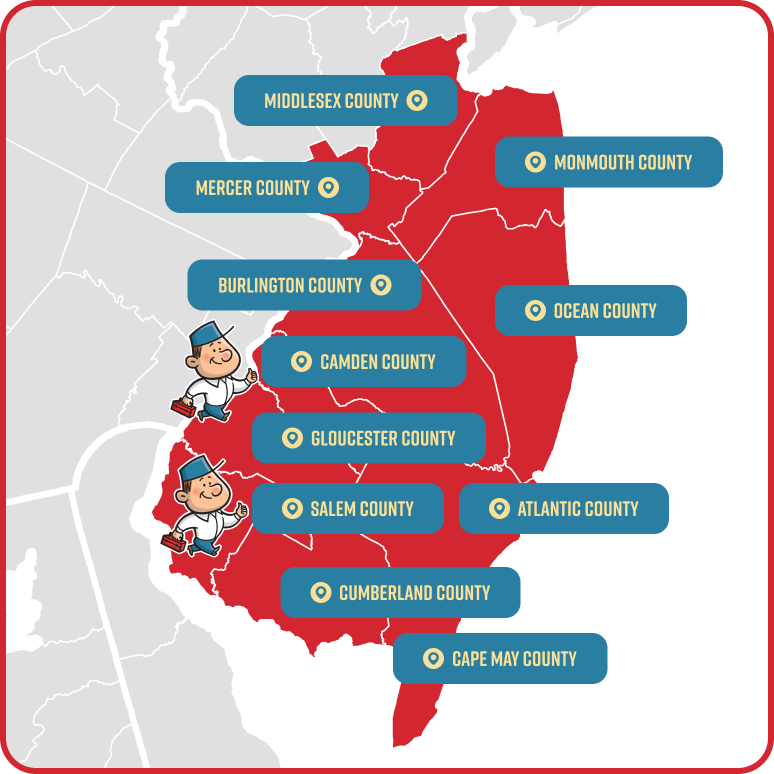
Serving South Jersey, Including Woodbury, Salem & Surrounding Communities
Harris Plumbing, Heating, Air, & Electric has been serving the communities in New Jersey for over 40 Years. Even if you don’t see your county listed, give us a call to find out if we can make it out to your home. Camden County
- Burlington County
- Gloucester County
- Cumberland County
- Salem County
- Atlantic County
- Cape May County
- Mercer County
- Ocean County
- Monmouth County
- Middlesex County